
Junk Food and Performance: How Your Diet Affects Focus and Energy
2025-12-31
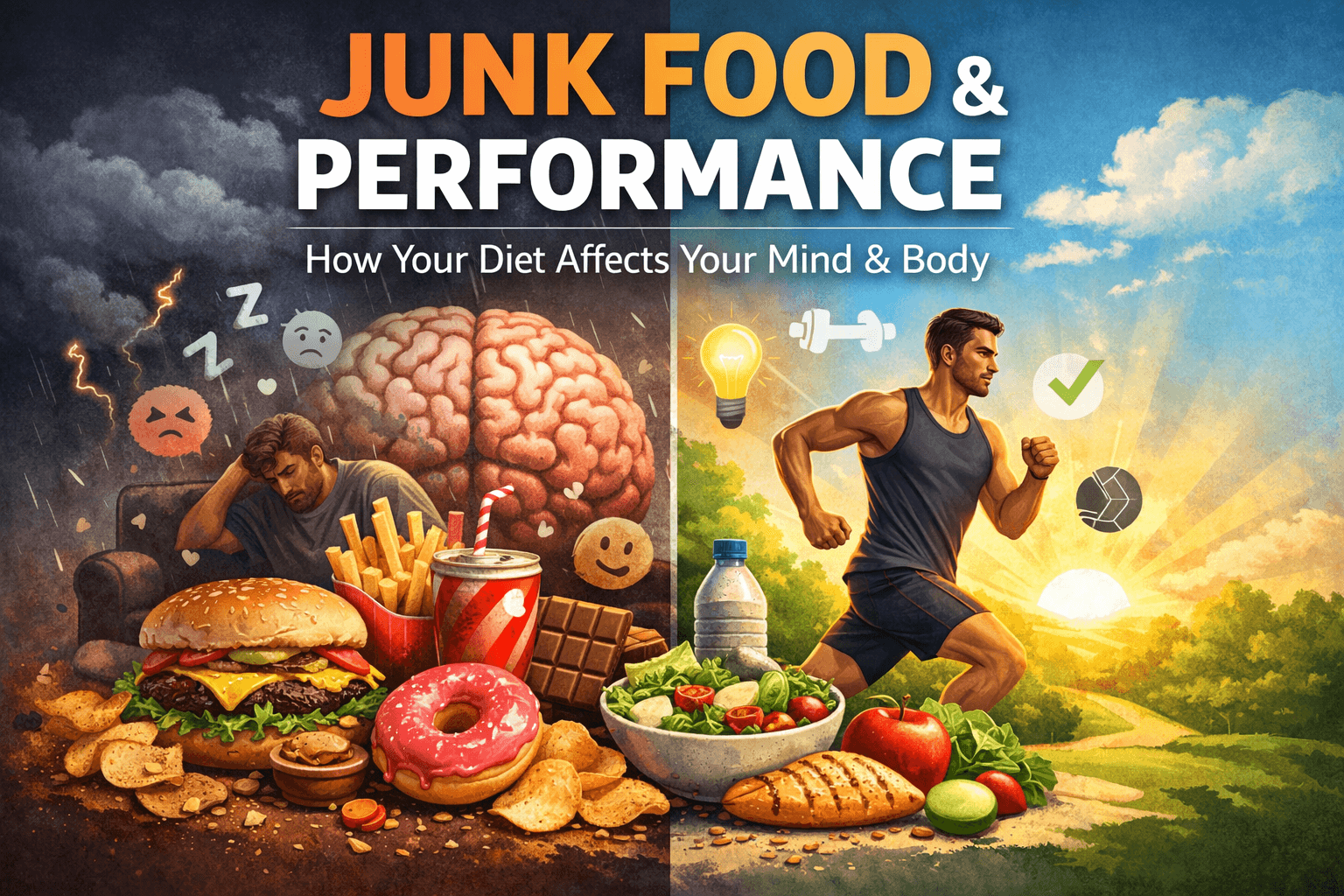
Junk food and performance: what you eat shapes how you think and move
Most people know junk food is not great for long-term health. What is talked about less is how strongly it affects daily performance. Not just in sports, but in focus, energy, mood, and decision-making.
If you have ever felt sluggish after fast food, unfocused after sugary snacks, or mentally foggy during an afternoon work session, food is likely part of the reason.
What counts as junk food?
Junk food usually refers to foods that are high in sugar, refined carbohydrates, unhealthy fats, and artificial additives, while being low in nutrients. Examples include:
- Sugary drinks and energy drinks
- Candy and pastries
- Fast food burgers and fries
- Chips and heavily processed snacks
These foods are designed to be tasty and convenient, but they are not designed to support sustained performance.
Energy spikes and crashes
Junk food often causes rapid spikes in blood sugar. At first, this can feel like a burst of energy. Shortly after, blood sugar drops, leading to fatigue, irritability, and reduced concentration.
This cycle is especially harmful for tasks that require sustained focus, such as studying, coding, writing, or strategic thinking. Instead of steady energy, your brain is constantly adjusting to highs and lows.
Impact on focus and cognition
Your brain uses a large amount of energy and depends on stable glucose levels and nutrients to function well. Diets high in junk food are linked to:
- Reduced attention span
- Slower reaction times
- Poorer memory and learning
- Increased brain fog
Highly processed foods also tend to be low in omega-3 fats, vitamins, and minerals that support brain health. Over time, this can subtly but consistently reduce cognitive performance.
Mood and motivation
Food affects mood more than many people realize. Frequent junk food consumption is associated with increased feelings of anxiety, irritability, and low motivation.
When energy levels swing up and down, motivation often follows the same pattern. This makes it harder to start tasks, stick with difficult work, or maintain discipline over long periods.
Physical performance and recovery
For physical performance, the effects are even more visible. Junk food can lead to:
- Lower endurance
- Slower recovery after workouts
- Increased inflammation
- Reduced muscle repair
Athletic performance depends on consistent fuel, hydration, and nutrients. Junk food may provide calories, but it does not provide quality fuel.
Why consistency matters more than perfection
This does not mean you need to eat perfectly all the time. Performance is shaped by patterns, not single meals. An occasional treat will not ruin your focus or fitness.
Problems arise when junk food becomes the default rather than the exception. Over time, small daily choices compound into noticeable performance gaps.
Better food, better output
People often look for productivity hacks, supplements, or new tools to improve performance. Diet is one of the simplest and most overlooked levers.
Eating foods that provide steady energy, such as whole grains, protein, fruits, vegetables, and healthy fats, supports clearer thinking, better mood, and more consistent output throughout the day.
Final thought
Performance is not just about willpower or talent. It is also about inputs. Junk food makes performance harder than it needs to be.